Nanoencapsulation and Supplement Absorption Science
Nanoencapsulation protects compounds through digestion to boost absorption rates.
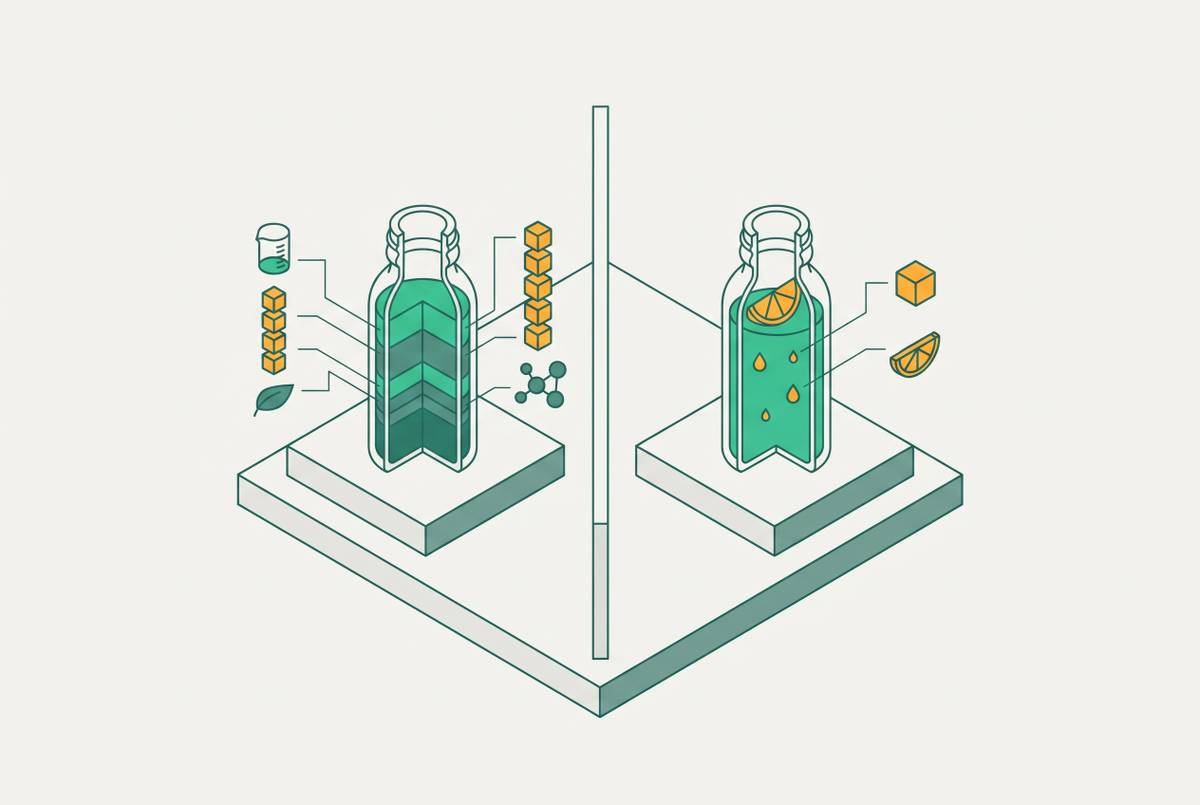
A drinkable formula can be an alternative to capsules, but liquid alone does not prove better absorption. Nanoencapsulation addresses the deeper problem by protecting active compounds through digestion and helping more reach the bloodstream. The useful comparison is ingredient, dose, and delivery format together.
Why most supplements fail before they reach your bloodstream
Someone reading a supplement label sees an ingredient they know, a dose in milligrams, and a reason to think it will work. That number looks like the whole answer. But the amount it describes in the product can differ from the amount that reaches the bloodstream. The gap between those amounts is the problem of bioavailability. Before a compound can act, it must survive storage and digestion, dissolve, and cross the intestinal barrier.
For many bioactive compounds, that journey is difficult. These lipophilic compounds dissolve readily in fats but poorly in the watery environment of the gut. Others encounter barriers because of their molecular size or poor intestinal permeability. Even after absorption, the liver can break down a large share before it reaches the rest of the bloodstream, through a process called first-pass metabolism. Swallowing an ingredient is not the same as delivering it.
Light, heat, oxygen, and changes in acidity can damage sensitive compounds while they are being processed or stored. Digestion then adds further conditions that can degrade them. This helps explain why a compound that has a strong effect in a controlled lab setting can have a much weaker effect when taken by mouth. Cognitive ingredients such as Lion’s Mane, Bacopa monnieri, and curcumin, as well as vitamins, are candidates for these losses.
What nanoencapsulation does and how it protects active ingredients through digestion
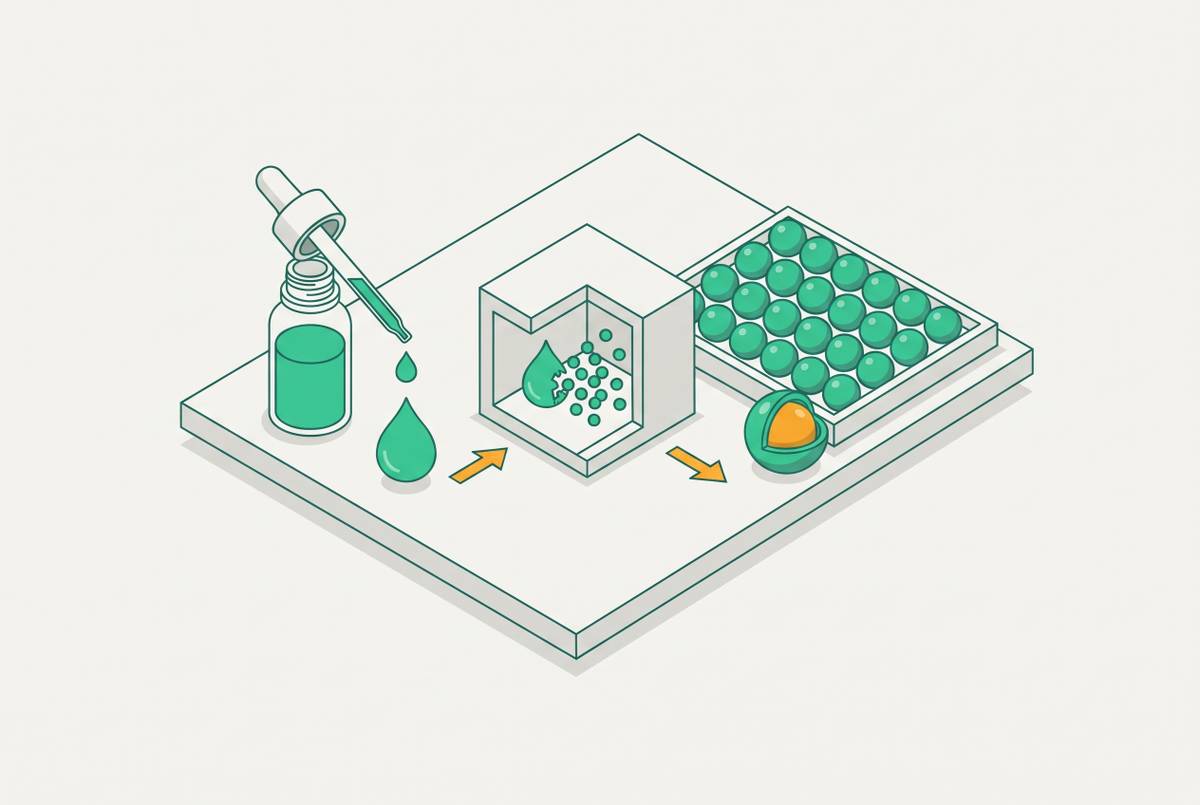
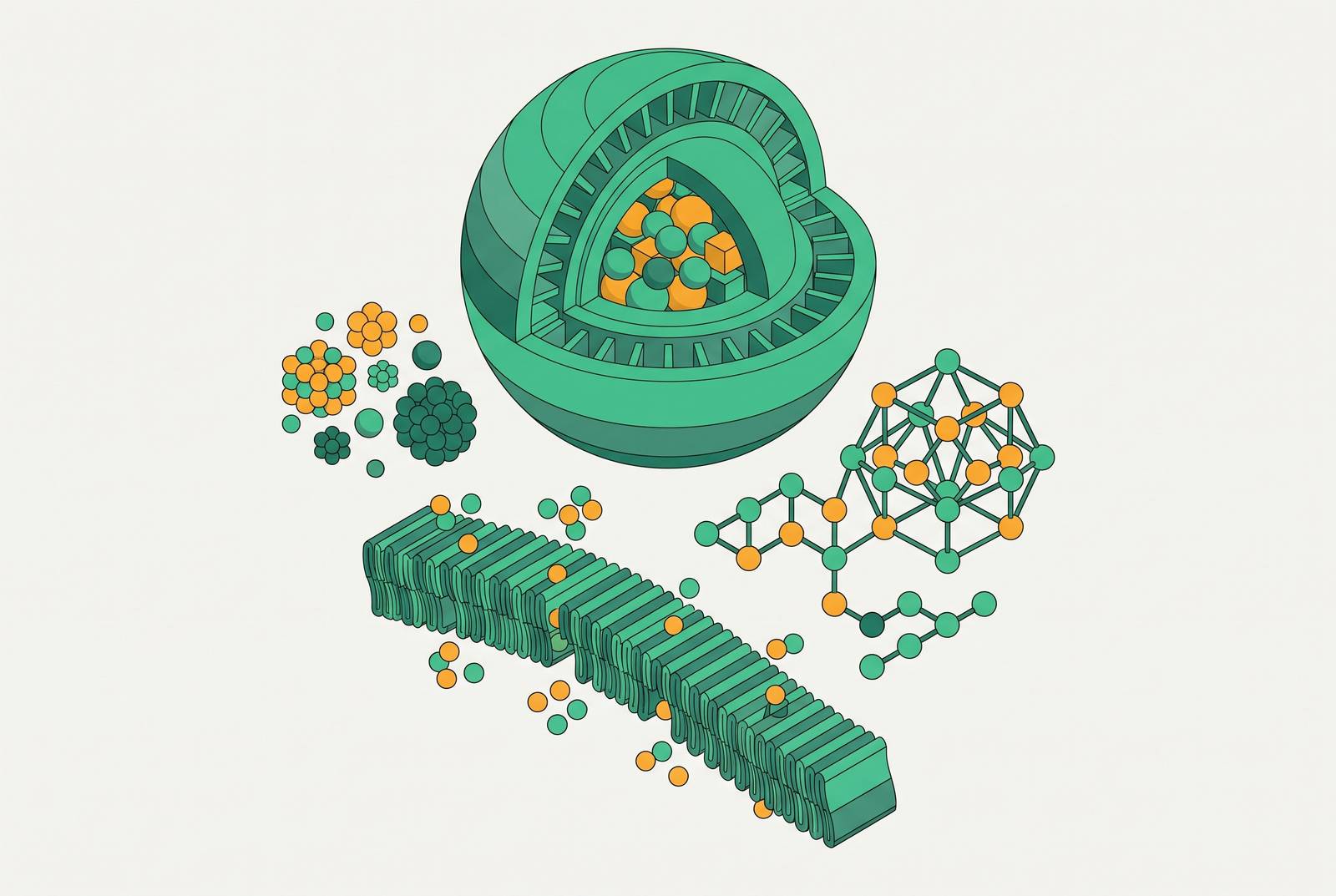
Nanoencapsulation wraps active compounds in very small carriers made to protect them and help them pass through the gut. The carrier is not just extra packaging. It helps deal with what keeps an ingredient from being absorbed, including chemical damage and poor solubility. Depending on its design, it can shield the contents from light, heat, oxidation, and extremes of acidity during storage and digestion.
That protection also changes how an ingredient encounters digestive fluids. A suitable carrier can help a fat-soluble compound disperse in the watery gut environment, making it more available for uptake. Some carriers stick to the intestinal lining, a property called mucoadhesion, which extends contact time. Intestinal cells can also take up nanocarriers through endocytosis. In plain terms, the cells draw the carriers inside.
A further advantage is possible with certain lipid-based carriers. If they enter lymphatic transport, they can bypass the liver’s first-pass processing, reducing that early loss of absorbed material. A product cannot establish it merely by printing “nano” on its label. Controlled release offers another distinct benefit, allowing a carrier to hold its contents until a target part of the digestive tract rather than releasing them prematurely in the stomach.
How large the bioavailability gap actually is, measured against unencapsulated forms
Curcumin provides a striking example of the potential difference. Encapsulation in lipidic nanoconstructs has been reported to produce a nearly 70-fold improvement in oral bioavailability compared with free curcumin. Laboratory and in vitro results are not interchangeable with human absorption data, and a striking finding for one carrier does not establish the performance of every finished supplement. Nor does absorbing more, on its own, prove that cognition will improve by as much.
The broader evidence described for encapsulation spans improvements of between two- and tenfold over free forms across bioactive classes. The size of the gain varies by compound and carrier. It is not a guaranteed minimum for a product, and it should not be converted directly into a claim about clinical benefit. Curcumin sits at a particularly vivid end of the comparison because conventional forms are poorly absorbed.
Liposomal vitamin C has shown greater oral bioavailability than non-liposomal vitamin C, although results vary widely across studies. This challenges the assumption that a familiar nutrient is automatically absorbed well enough in any format. Two products that list the same dose can therefore lead to different amounts in the bloodstream. The evidence needs to apply to the compound and delivery system in the product being sold.
Why dose on the label is meaningless without knowing how much survives to reach circulation
A label dose is not useless, but alone it cannot establish effective delivery. The practical framework has three parts, which are the ingredient, the amount, and the delivery format. Each answers a different question. The ingredient identifies what is being tested, the amount allows comparison with research, and the format helps explain whether the body can access it. Leaving out any one makes the other two harder to interpret.
Ashwagandha shows why the dose still matters in that framework. Clinical evidence typically involves doses of 300–600 mg, rather than merely the presence of its name on a label. Research on a much different dose cannot back a claim for a small amount. Better delivery does not automatically erase that mismatch. A large amount on the label also does not tell how much survives digestion and first-pass metabolism.
A. L. Lopresti of Clinical Research Australia led a 2025 randomized controlled trial, published in Clinical Drug Investigation, in which people took 300 mg of Bacumen® each day for 12 weeks. The trial found no between-group differences in the primary cognitive outcomes of verbal learning, attention, and working memory, though stress and fatigue measures favored the extract. The trial shows that a documented dose does not guarantee the expected outcome, while also giving readers enough information to assess what was tested. Transparent dosing and delivery disclosure make a claim evaluable.
How specific cognitive ingredients behave when bioavailability is actually addressed
Lion’s Mane, or Hericium erinaceus, shows why the active compounds deserve more attention than the ingredient name alone. Erinacines can cross the blood-brain barrier and stimulate nerve growth factor, or NGF, synthesis in the central nervous system. That mechanism underpins its neuroprotection claims. Because these bioactives are relatively sensitive, protecting them through digestion and improving uptake is relevant to whether they reach their intended site. The mechanism does not, however, establish the performance of every Lion’s Mane extract.
In a 2025 acute randomized placebo-controlled crossover study of healthy adults aged 18–35, a single dose of fruiting body extract had no significant effect on composite global cognition or mood. Timing is important when interpreting that result. A single-dose study in healthy young adults may miss effects linked to neuroplasticity that take longer to appear in people who are older or have impairments. But the chance of such effects does not make a negative acute finding proof of a long-term benefit. Extract identity, exposure, and duration all shape what a trial can show.
Ashwagandha, or Withania somnifera, has a different role. Its withanolides act on the hypothalamic-pituitary-adrenal axis, the stress-response system involved in cortisol output. Elevated cortisol can impair memory consolidation and sustained attention, so hormonal regulation is relevant to cognition. The effects that have been reported build over four to eight weeks. Cortisol can fall without an equally clear change in perceived stress. Delivery matters because that evidence applies only when the amount that reaches the bloodstream matches what was studied.
Matcha and L-theanine raise a different formulation question, involving how stimulation is experienced. Theanine can modify caffeine’s effects, reducing jitteriness while supporting calm alertness. EEG research found that theanine suppressed a significant increase in awakening time induced by caffeine, suggesting the combination may be less sleep-disruptive than equivalent caffeine alone. That shows why an ingredient combination’s actual effects and any encapsulation benefit for matcha require separate evidence.
Cognizin® is a patented, clinically studied form of citicoline, giving a formula a more specific research reference than a generic ingredient listing. A named form makes it easier to compare doses. It is not, by itself, proof of nanoencapsulation or superior absorption. For cognitive formulas, ingredient identity, delivery evidence, and outcome evidence answer separate questions that should remain separate.
The sleep–cognition link and why brain health is a daily system, not a single supplement decision
Those questions extend beyond the hours immediately after a dose. Sleep helps consolidate neuroplastic processes involved in learning and memory, while sleep deprivation can impair memory capacity and affect brain-derived neurotrophic factor, or BDNF. An ingredient aimed at alertness operates within that larger system. Feeling stimulated and supporting the conditions for learning are not the same goal.
BDNF helps support neuroplasticity and memory function. Research described in the evidence found that long sleep duration was associated with poorer global cognition in people with lower BDNF, but not in those with higher BDNF. That is an association, not a dosing instruction. It suggests that BDNF status may change the relationship between sleep and cognition. It does not show that a supplement can compensate for disrupted sleep.
Cortisol connects this system to the stress mechanisms already discussed. Insufficient sleep raises cortisol, while persistently elevated cortisol is involved in dysregulation of the stress-response system. Poor sleep and stress can reinforce each other. Ashwagandha’s withanolides are relevant to that hormonal pathway, while Lion’s Mane’s NGF-related mechanism may support neuroplastic maintenance over chronic use. These mechanisms give reasons to study effects over time, but they do not promise that repair will happen right away.
The time course therefore changes what a useful supplement claim looks like. Ashwagandha’s effects build over four to eight weeks, so the time to expect them differs from that of an immediate boost in alertness. Likewise, a single-dose Lion’s Mane trial cannot answer every question about longer-term neuroplastic effects. Consistency creates the conditions for evaluating those slower outcomes. Well-absorbed ingredients may support the system over time, but absorption alone cannot establish that sleep, memory, or attention will improve.
What should you look for in a ready-to-drink nootropic shot’s delivery system?
For a reader comparing drinkable options with capsules, the lesson is to assess the delivery system separately from the convenience of the format. A shot avoids swallowing a pill stack. Whether it delivers active compounds more effectively depends on evidence about its formulation. The first useful signal is a disclosed carrier format, such as liposomal delivery, a nanoemulsion, or a solid lipid nanoparticle. A generic “encapsulated” claim leaves too much unexplained.
The next signal is named, standardized ingredients at disclosed doses. Forms such as Cognizin® and Bacumen® give readers a defined ingredient to compare with research, though neither name establishes that a finished formula works. Specificity is especially useful for botanical extracts. A label that says only “lion’s mane extract” omits erinacine content and the distinction between fruiting-body and mycelium sources, limiting meaningful comparison with the evidence.
Independent testing provides a separate safeguard for daily use. Relevant testing includes ingredient identity and contaminants such as heavy metals, mycotoxins, PFAS, and plastic chemicals. Purity is not proof of cognitive benefit. Nor does safety testing of an ingredient show that enough testing has been done on a nano-enabled finished formula.
A food-grade, olive-oil-derived lipid system wrapping named ingredients at clinically referenced doses illustrates how several criteria could converge. Independent testing would address identity and purity, while formulation-specific absorption evidence would address delivery. No company verdict is needed to apply that lens. A meaningful trial window, such as a 100-day money-back guarantee, can allow time for consistent use, but a guarantee remains a commercial policy. Delivery technology earns its value through dependable daily use, the condition under which slower sleep–cognition–neuroplasticity effects can be meaningfully evaluated.
Sources
- Frontiers
- Nanoencapsulation of Nutraceuticals and Dietary Supplements for Effective Delivery
- Nanoencapsulation of nutraceuticals: enhancing stability and bioavailability in functional foods - PubMed
- Nanoencapsulation and Nanocoating of Bioactives of Application Interest in Food, Nutraceuticals and Pharma
- Emerging trends in nanotechnologies for vitamin delivery: Innovation and future prospects - ScienceDirect