Decision Fatigue and Willpower Depletion in Executive Roles
Willpower depletion is a myth; cognitive load is what actually drains executive decision-making.

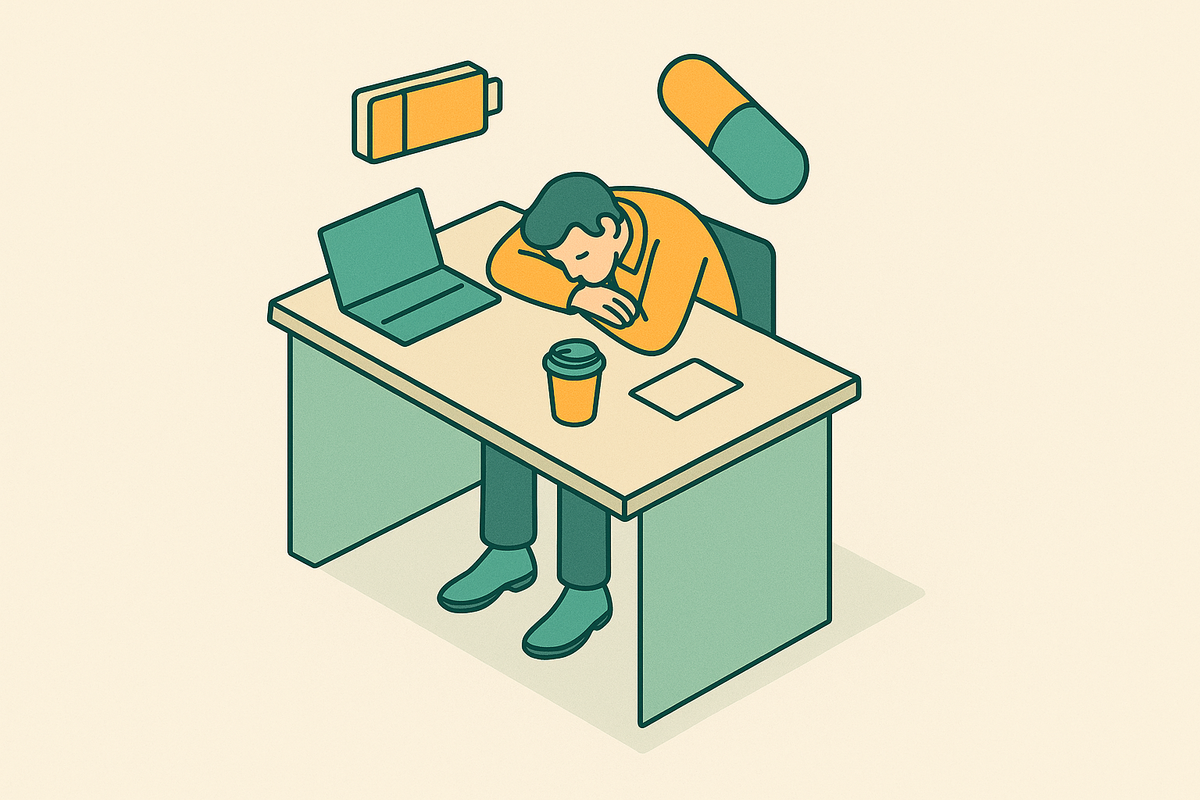
Decision fatigue in executive roles is real, measurable, and costly. The popular explanation for it, a finite willpower resource that depletes like fuel, has largely failed scientific replication. The more useful frame is cognitive load management, and understanding that distinction unlocks countermeasures that actually work.
Why executive decision quality degrades across the day — and what is actually causing it
Executives make worse decisions as the day progresses, and the pattern is well documented. Fatigued decision-makers shift from deliberate, effortful System 2 processing to fast, intuitive System 1 processing. That shift is efficient for reducing mental effort, but it brings measurable costs: increased errors, stronger recency bias, and a drift toward low-risk, low-return options that feel safe in the moment but undercut long-term performance.
The damage spreads through the organization in ways that standard decision-quality audits rarely catch. The same research found that fatigued executives become substantially less likely to delegate appropriately. This is not a minor inefficiency. It is a structural failure mode that concentrates poor decision-making at exactly the points where it matters most.
The harm extends downward through the organization. Supervisors who felt more stressed became more ego depleted, and their subordinates rated them as more abusive. What that something is, and what to do about it, depends on which explanation you trust.
Why the "finite willpower tank" explanation mostly failed — and what that changes
The strength model of self-control, known as ego depletion theory, proposed that each act of volition draws on a finite, domain-general resource. Once depleted, self-control fails. Roy Baumeister and colleagues developed the model as a serious scientific proposal, and the metaphor traveled into business media as settled fact. Coaching frameworks then built on it, telling you to preserve willpower, avoid decision overload, and restore the tank with breaks and glucose.
The empirical foundation did not hold. Two large preregistered multi-laboratory studies, across 23 labs and 36 labs respectively, returned ego-depletion effect sizes of d = 0.04 and d = 0.06. Those are effectively zero. The theory underlying the popular version of decision fatigue did not replicate. This is not a scandal. It is how science corrects itself when a compelling metaphor outruns the evidence that supports it.
The glucose sub-claim has collapsed most completely. The "35,000 decisions a day" figure that circulates through business media has no traceable primary source at all: the citation chain leads to a university blog post citing "various internet sources" and a trade book by Sahakian and LaBuzetta from 2013 that does not contain the figure. No primary source has ever been produced for it.
What has replaced the emptying-tank model is a conservation frame. The brain does not run out of resource so much as it shifts to conserving effort after sustained expenditure. The behavioral output looks similar, but the mechanism and the remedies differ. A January 2026 integrative review by Choudhury and Saravanan in Frontiers in Cognition, synthesizing 23 studies from an initial pool of 1,027 articles, classified decision fatigue causes as individual, organizational, and external. Ten contributing factors emerged, and none of them map neatly onto a single draining resource.
The practical implication is more encouraging than it first appears. Executives who built good habits on the wrong theory still benefit. Those who understand the real mechanism can design better systems.
The cognitive load frame that actually explains the pattern
Working memory holds and manipulates information while you reason, and it has real capacity limits. When those limits are pressed without a break, the brain changes its processing strategy instead of stopping. The movement from System 2 to System 1 is not failure. It is the brain's rational response to sustained load, efficient for routine choices and costly for strategic ones that require novel analysis.
The causes of that load are multi-domain. The Choudhury and Saravanan review identified ten contributing factors across three categories: individual factors like cognitive style and baseline resilience, organizational factors like decision volume and unclear decision rights, and external factors like time pressure and interruptions. Load accumulates from structural sources that can be managed, not just from the number of hard choices an executive faces. This reframes the problem from a personal endurance test into a design challenge.
The control variable matters more than raw effort. Structural autonomy, not just effort level, shapes how load accumulates across a day. An executive with clear decision rights and the authority to sequence their own work faces a different physiological trajectory than one drowning in approvals and interruptions.
This frame is more actionable because it points to structural interventions rather than volitional ones. The intervention target is the system, not the individual's willpower. Science-backed mental performance shots like Magic Mind preserve exactly that kind of attentional stability, because they are formulated with clinically validated ingredients to sustain focus and energy without the crash cycle across extended high-load work.
How chronic stress accelerates cognitive load and why cortisol timing matters
Chronic stress does not merely add to the burden executives carry. It degrades the prefrontal infrastructure that executive decision-making runs on. Amy Arnsten's research at Yale identified a mechanism she calls "chemistry over circuitry." Under stress, cortisol triggers excessive dopamine and norepinephrine release in the prefrontal cortex. In small amounts these neurotransmitters are essential to cognitive function. At stress-level concentrations they disconnect the prefrontal networks that handle working memory, planning, and impulse control.
The damage extends to memory systems. In the hippocampus, chronic cortisol exposure reduces dendritic branching and suppresses neurogenesis. That impairs the memory formation that supports retrieval of relevant precedent during decisions. An executive who cannot access the right analogy from experience is making decisions with a degraded database, regardless of how much effort they apply.
The shape of the daily cortisol curve predicts cognitive performance better than absolute cortisol level. A steep morning rise followed by a clean afternoon decline is associated with better memory, attention, and executive function than a flat curve, even when total cortisol exposure is lower in the flat-curve group. The goal is not to minimize cortisol but to maintain a healthy rhythm.
The HPA-axis loop makes stress self-reinforcing. Stress raises cortisol, elevated cortisol disrupts sleep onset and continuity, and sleep loss further dysregulates cortisol. Sleep is not a wellness side note. It is the cortisol regulator that sets tomorrow's cognitive baseline.
Structural interventions that reduce decision load before it accumulates
The highest-leverage countermeasures are structural. Decision sequencing comes first. Cognitive capacity is highest in the first two to three hours after waking. Scheduling irreversible, high-stakes strategic choices in that window, and moving operational and administrative approvals to the afternoon, is a direct application of the daily performance curve research. Most executives do the reverse, starting with email and meetings and leaving hard choices for late afternoon.
Decision architecture matters as much as sequencing. Clear delegation frameworks, defined decision rights, and administrative offloading reduce the volume of low-value decisions that consume capacity but do not require executive expertise. Organizations with deliberate decision architecture report faster strategic decision cycles and higher executive satisfaction. The gains come from removing structural friction, not from asking individuals to manage their energy better.
Time blocking provides the recovery intervals that attentional networks require. The organization that packs a calendar with consecutive difficult decisions is not extracting more value from its executives. It is systematically degrading the quality of each subsequent choice. These structural changes are necessary but incomplete. Understanding the actual mechanism matters here: executives can optimize not just when they decide, but the neurochemical conditions that let them decide well.
Ingredients with evidence for supporting cognitive load capacity and stress resilience
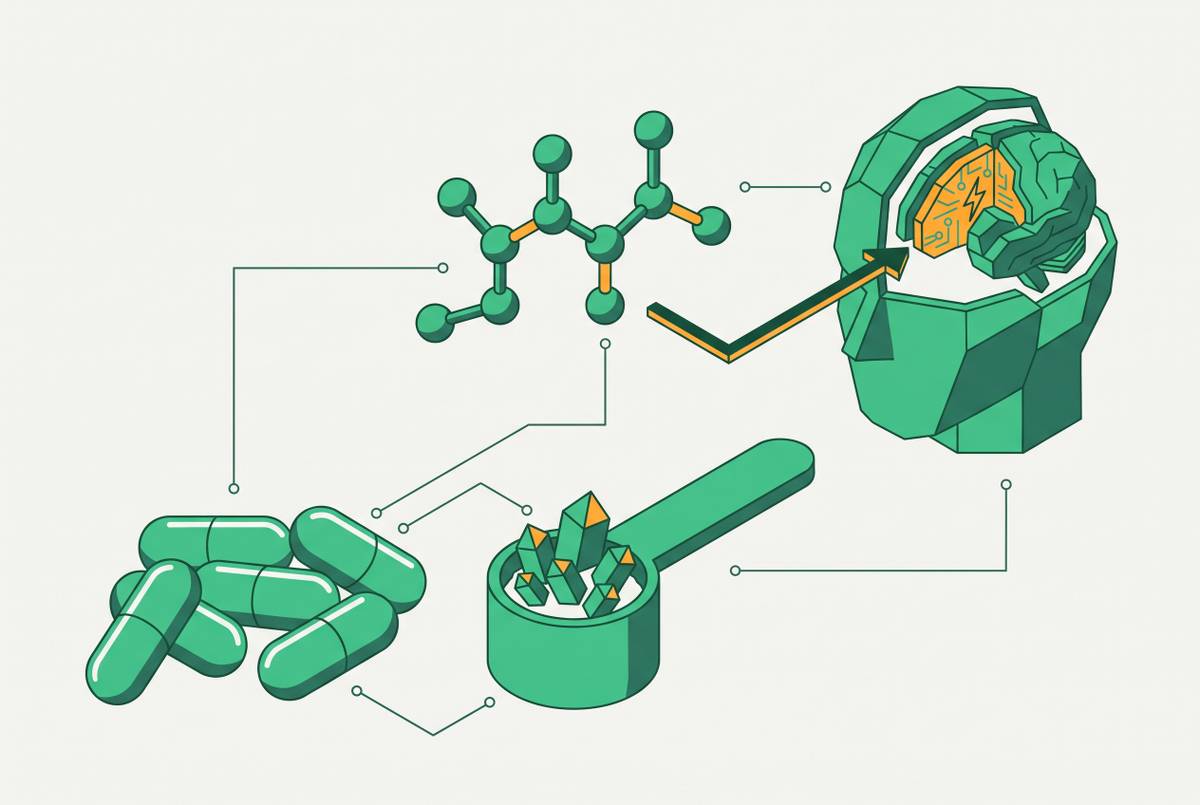
A targeted stack of adaptogens and nootropic compounds can support the physiological substrate of decision capacity, meaning HPA-axis regulation, prefrontal neurotransmitter balance, and synaptic plasticity. The evidence varies substantially by ingredient and time horizon, and those differences matter for how protocols should be built. Ashwagandha regulates the HPA axis, moderating the cortisol dysregulation that accelerates cognitive load. In a double-blind trial, perceived stress dropped meaningfully at standard dosing over eight weeks. Effects accumulate over weeks of consistent use. This is not an acute cognitive tool.
Rhodiola rosea is one of the few adaptogens with meaningful acute benefit, producing effects within 30 to 45 minutes. In clinical trials, it cuts mental fatigue during prolonged work and improves accuracy on cognitive tasks under stress. Standardized extracts at 3% rosavins and 1% salidroside are required for reliable effects. This makes Rhodiola relevant to pre-decision-block timing.
Bacopa monnieri operates on a longer timescale. It reduces salivary cortisol under acute cognitive challenge, so it acts on both the performance substrate and the stress accelerant. The onset is 4 to 8 weeks of daily intake. One randomized placebo-controlled trial of 30 people with mild cognitive impairment found improved cognitive test performance after 16 weeks, but performance declined after the treatment period ended. Applied Food Sciences completed a trial comparing fruiting body extract and a fruiting body-plus-mycelium extract on cognitive performance and gut microbiota in healthy adults, with results verified as of February 2026. The field is actively generating new data, and the honest framing is that Lion's Mane is promising rather than established.
The caffeine plus L-theanine combination is the most robustly studied jitter-free focus protocol. Combining 97 mg of caffeine with 40 mg of L-theanine significantly improved attention-switching accuracy and produced a state described as "calm alertness" without the jittery side effects of caffeine alone. Matcha delivers this stack naturally, and the onset is acute, within 30 to 60 minutes, making it the most immediately applicable ingredient for decision-block preparation. The combination directly addresses the crash-and-jitter pattern that worsens cognitive load volatility across the executive day.
The acute versus chronic distinction is critical for protocol design. Magic Mind's formulation includes this stack with patented nanoencapsulation technology, which the company reports delivers 5x more effective absorption than pills and powders. It determines how much of a dose actually reaches the bloodstream and the brain.
Putting it together: a cognitive load protocol for high-decision-volume roles
The executives least affected by decision fatigue are not those with more willpower. They are those who have designed their days, their stress response, and their neurochemical baseline to reduce load before it accumulates and to recover it faster when it does. The morning begins by protecting the high-capacity window. The first 90 to 120 minutes go to irreversible or near-irreversible strategic decisions, shielded from meetings, email, and administrative approvals. If you want acute ingredient support, take the caffeine plus L-theanine combination 30 to 60 minutes before the decision block, and add Rhodiola when stress load is high. Magic Mind's Original or MAXX variants are designed for this pre-work window and combine the L-theanine and caffeine stack with longer-acting adaptogens in a single daily shot.
Midday requires structural recovery rather than glucose. A genuine break, not a working lunch, of at least 20 to 30 minutes allows attentional networks to reset. The evidence does not support sugary snacks as a decision-quality intervention. After lunch, schedule meetings with no decision outcome, relationship management, and execution oversight, because that work demands high engagement but low novel-judgment demand. New strategic decisions that arise after capacity has declined should be delegated or deferred. These are the decisions that cost the most to undo.
Evening is when the HPA axis resets. Sleep is the master cortisol regulator. A clean sleep onset suppresses cortisol secretion, providing the nightly brake that fragmented sleep removes. Chronic stress that runs into the evening disrupts this brake, and the HPA feedback loop means tomorrow's decision capacity is being set by tonight's cortisol level. Ashwagandha and Bacopa, taken consistently, operate on the multi-week timescale that gradually lowers the cortisol baseline, the slow layer that makes the daily protocol work better over time.
Individual protocols are necessary but not sufficient. McKinsey estimates companies lose the equivalent of hundreds of thousands of days of manager time per year to poor decision-making processes. The structural causes identified in the Choudhury and Saravanan framework, unclear decision rights, excessive approval chains, high interruption rates, require organizational fixes rather than individual ones. The executive's role is both to optimize their own cognitive conditions and to design decision environments for their teams. The downstream harm from stressed, depleted leadership is visible in team culture and decision quality before it surfaces in financial results. What works is not effort. It is architecture, built at every level from the neurochemical to the organizational.
Sources
- Introduction
- An integrative review on unveiling the causes and effects of decision fatigue to develop a multi-domain conceptual framework
- An integrative review on unveiling the causes and effects of decision fatigue to develop a multi-domain conceptual framework - PubMed
- Frontiers
- Self-Control and Limited Willpower: Current Status of Ego Depletion Theory and Research
- Forward-looking questions regarding ego depletion and mental fatigue in sport psychology: Comment on Englert - ScienceDirect