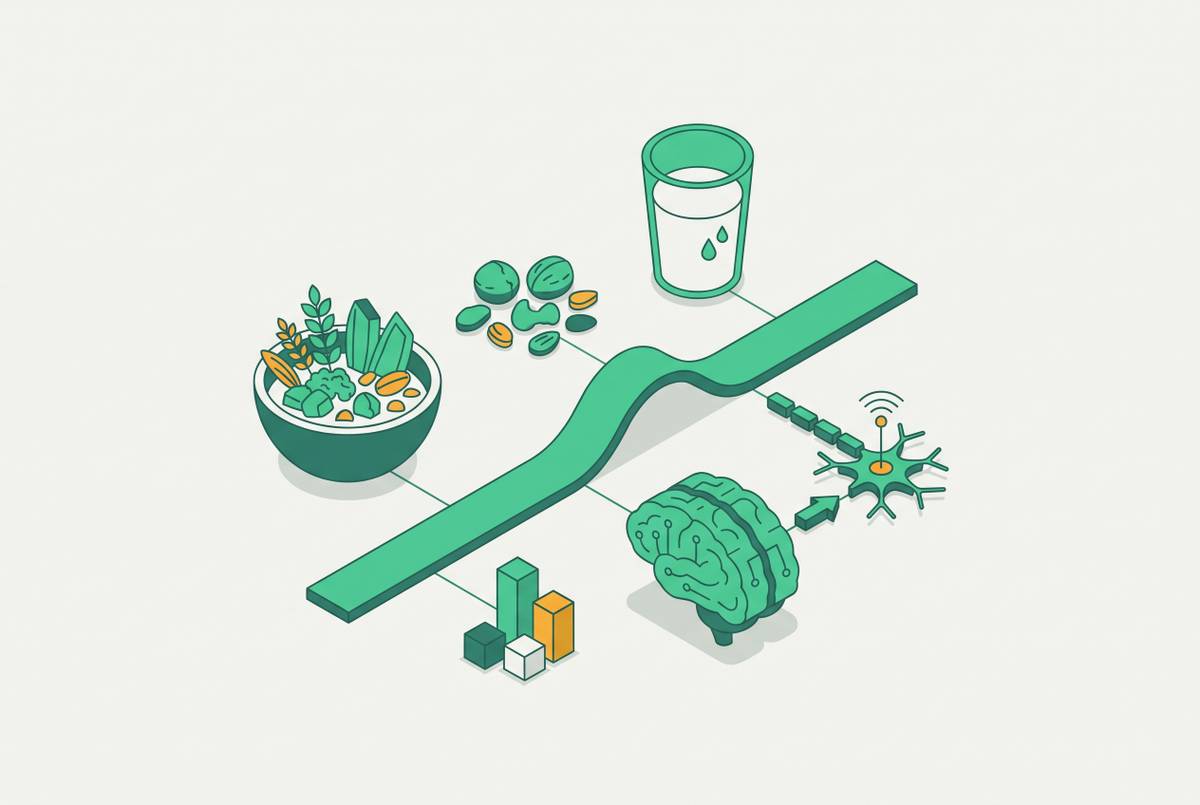
Creatine Supplementation for Cognitive Fatigue Reduction
Creatine supplements boost mental stamina when your brain's energy reserves are depleted.
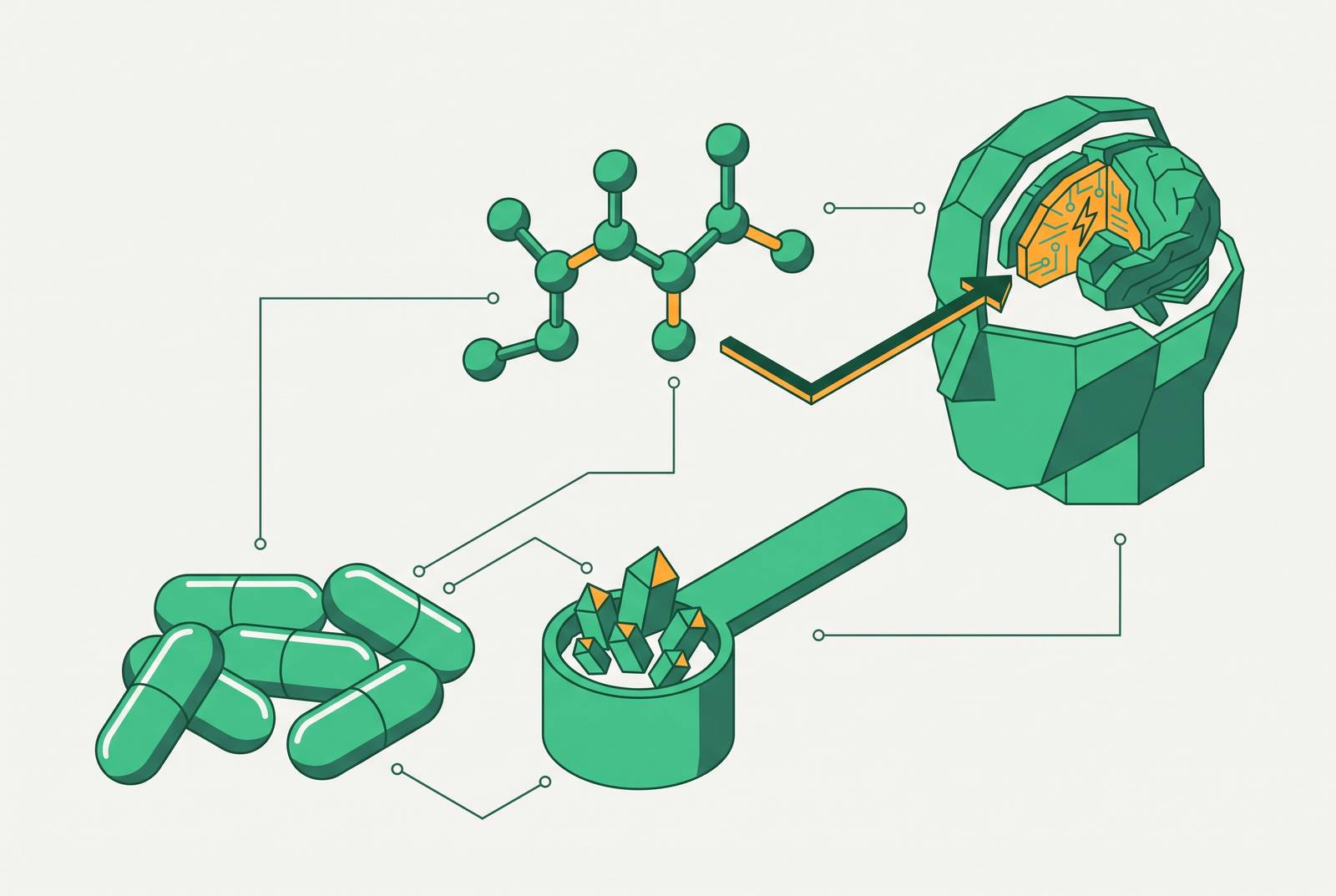
Creatine supplementation can reduce cognitive fatigue by helping the brain replenish ATP, the energy supply its cells need to keep working. The evidence is strongest when that supply is under pressure, including sleep deprivation and sustained mental effort. Creatine’s promise as a targeted tool for mental stamina is limited to the conditions the evidence supports.
Why the brain is unusually vulnerable to energy shortfalls
The brain uses a disproportionate share of the body’s energy despite making up a small fraction of its weight. That mismatch leaves little to spare when the brain needs more energy than it has. ATP availability matters because brain cells need energy both to maintain communication and to tackle unusually hard tasks. An energy shortfall can therefore slow thinking, increase mistakes, and reduce mental stamina. Cognitive fatigue is not simply a matter of feeling tired.
Speed makes this energy problem harder. Connections between neurons operate on extremely fast timescales, so a steady background supply alone is not enough. Energy must also be ready to use quickly when the brain needs more. Muscle can rest between bouts of effort, while the brain keeps up high metabolic activity all the time. Problem-solving, decision-making, and sustained attention add pressure to that already demanding workload.
This energy budget is foundational to mental performance support. For knowledge workers who perform at a high level, sleep, physical training, and supplements may each help with a different part of that problem in their daily lives. Creatine targets rapid energy supply, while multi-ingredient formulas such as Magic Mind’s mental performance shot address several proposed routes to mental stamina. Those approaches are not interchangeable, and their mechanisms explain why.
How the phosphocreatine system keeps brain cells running under pressure
Creatine helps bridge the gap between energy demand and immediate supply. Its central role is to buffer ATP through the phosphocreatine system, a rapid reserve that cells can draw on under pressure. An enzyme called creatine kinase transfers a high-energy phosphate from phosphocreatine to ADP, producing ATP almost instantly. This reversible reaction is the fastest ATP-resynthesis pathway available to cells. In plain terms, it helps replenish usable energy before a temporary shortfall disrupts cell function.
In the central nervous system, that buffer helps neurons communicate and protects them against metabolic stress. Creatine is also present in synaptic vesicles, the structures involved in communication between nerve cells. As well as serving as backup fuel, it may therefore have a direct effect on how cortical neurons communicate. That possible role broadens the explanation, but ATP buffering remains the main reason creatine is relevant to cognitive fatigue.
Other pathways may contribute more indirectly. Creatine supplementation appears to stimulate mitochondrial activity in hippocampal neurons and may influence serotonin and dopamine systems involved in mood and mental stamina. It also supports more intense physical training. Training can cause muscles to release signals, including irisin and cathepsin B, that stimulate BDNF and act on the brain through the muscle-brain axis. These routes link energy support to how the brain works more broadly, though the evidence is stronger for some proposed effects than for others.
What happens to cognition when the phosphocreatine system is stressed
The system’s limits become clearest when demand outstrips its capacity. Sleep deprivation, hypoxia, and sustained mental effort can reduce brain phosphocreatine and ATP reserves. These are also conditions in which attention, processing speed, and working memory suffer. The resulting fatigue has a measurable energy component, rather than being only a subjective sense that thinking feels harder.
At the cellular level, disturbed high-energy phosphate availability can undermine neuronal plasticity, neurotransmitter production, and signaling between neurons. The effects of disturbed high-energy phosphate availability extend beyond the speed of a single thought to the processes that let the brain keep communicating and adapting under load. The mechanism therefore makes a testable prediction. If supplementation raises the brain’s phosphocreatine stores, it should ease some of the cognitive deficits that appear when those stores run low.
What the clinical evidence shows — and where it is strongest
Human trials support parts of that prediction, but not a blanket claim of better cognition. Memory and processing speed show the clearest, most repeatable improvements. Attention also improves in some settings, while results for executive function and overall cognitive scores vary more. The important distinction is between improving a particular ability and improving thinking across the board. Evidence for the first does not establish the second.
Under hypoxic conditions, creatine preserved performance on complex attention tasks compared with placebo. It also increased corticomotor excitability, a measure related to communication between the brain and muscles. A larger energy reserve can also help during sleep deprivation.
Results in middle-aged and older adults are more mixed than a simple age-based promise would suggest. A 2026 study found some favorable changes in markers of cognitive function in these groups. However, its cognitive findings were exploratory and did not show broad statistical significance. Such results support further investigation before any firm claim of general improvement.
The limit is clearest in well-rested, non-depleted young adults. Julia Fabiennene Sandkühler, lead author of a 2023 study on creatine and cognition, says that small working-memory improvements left it unclear whether creatine also helps with more complex mental tasks. A small change on a cognitive task is not automatically a meaningful change in demanding real-world work.
Who gets the most out of creatine supplementation for cognitive fatigue
The clinical findings point toward people who have less energy to spare. That includes older adults experiencing changes in brain energy metabolism, people under acute strain from sleep loss or hypoxia, and those whose baseline brain energy is compromised. Physical exhaustion can also place someone in the stress-and-deficit group. These categories describe conditions in which supplementation has the strongest rationale. They do not guarantee that every person within them will respond.
For founders, executives, and other knowledge workers, recurring sleep loss and back-to-back demanding sessions make the energy-stress findings relevant. A high-pressure job alone, however, is not evidence of an ATP deficit or proof that creatine will help. Among deliberate supplement users, including customers of products such as Magic Mind, that is a useful distinction between matching an ingredient to a need and simply adding another compound.
Older adults are also the focus of research combining creatine monohydrate with resistance training. A registered trial, NCT06948149, is examining that combination in older adults with mild cognitive impairment, but a registered study is not a result. Separately, disrupted brain energy metabolism may help explain creatine’s relevance to mood-related research. The relevance to mood-related research is limited to brain energy metabolism, leaving supplement treatment for mood problems unsupported.
The longer-term case: neuroprotection and brain resilience beyond acute fatigue
Rapid ATP replenishment is only part of the case for consistent use. Creatine may also raise brain phosphocreatine concentrations and improve mitochondrial efficiency over time. Those changes could help neurons withstand metabolic stress over time as well as get through one demanding afternoon. This is a separate argument about resilience, and the evidence is still emerging. It should not be mistaken for proof of disease prevention.
One proposed route involves the brain form of creatine kinase. This enzyme is vulnerable to oxidative damage in neurodegeneration. Raising intracellular creatine may offer additional protection against its inactivation by free radicals. If that protection holds, it would help preserve part of the system responsible for rapid ATP replenishment. The mechanism is plausible, but it does not establish a long-term clinical outcome by itself.
Creatine also appears to reduce neuroinflammation and oxidative damage to brain cells. BDNF is among the proposed mechanisms connecting these effects with neuroplasticity, neurogenesis, and memory formation. Together, these findings give daily use a broader rationale than an occasional response to fatigue. They still call for measured language, including “may” and “appears to,” because cellular protection and lasting cognitive benefit are not the same endpoint.
How to use creatine: form, dose, and what the evidence actually supports
Creatine monohydrate is the evidence-backed starting point. The International Society of Sport Nutrition (ISSN) identifies it as the most extensively studied form and finds claims of better tissue uptake or less degradation from alternative forms currently unfounded. More elaborate forms therefore do not have an established advantage. The practical daily approach supported by the notes is 3 to 5 grams taken consistently. Most people do not need a loading phase.
The daily dose is meant to support creatine stores, with no promise of an immediate mental lift. It is also distinct from the larger doses studied during acute sleep deprivation.
A 2024 study in Scientific Reports found that one dose of 0.35 g/kg body mass raised the amount of creatine in the brain during sleep deprivation. That finding applies to a specific stress condition, leaving the standard daily protocol as the supported default for ordinary mental fatigue. People with kidney disease should consult a physician before supplementing, a precaution that belongs in routine dosing guidance without alarmism.
What can support focus without relying on caffeine, and where does creatine fit?
Creatine addresses one bottleneck, namely ATP availability. A broader approach can also help with alertness in the moment, impairment from stress, and neuroplasticity over time. Those are different jobs, so the ingredients should not be judged as though they all deliver the same effect on the same schedule. For readers who cannot tolerate stimulants, caffeine content is a separate criterion from evidence for memory or fatigue. A caffeine-free label or a long list of ingredients alone cannot show that a product helps people stay focused all day.
Ceremonial-Grade Matcha combines caffeine with L-theanine. That pairing can support speed and accuracy on cognitive tasks while reducing distraction, with L-theanine smoothing caffeine’s stimulant effects. Evidence supports taking the combination around half an hour before demanding tasks. Its caffeine content rules it out as a substitute for a caffeine-free option. The mechanism also should not be treated as a guarantee that no user will experience jitters.
Rhodiola Rosea has evidence for a more immediate anti-fatigue effect. A controlled study in sleep-deprived military cadets found a pronounced effect after a single dose, while its active compounds appear to support mitochondrial energy metabolism and inhibit monoamine oxidase. Lion’s Mane has a different proposed role through nerve growth factor and synaptic plasticity. Most of the evidence for it is still preclinical, with little data from trials in humans. A plausible longer-term pathway is not evidence of immediate alertness.
Bacopa Monnieri has human trial support for verbal learning and memory acquisition, but measurable benefits require consistent use for 8–12 weeks. Its proposed effects involve neurotransmitter modulation and antioxidant protection for hippocampal neurons. Cognizin® (citicoline) instead supports brain energy metabolism and phosphatidylcholine synthesis. These differences in mechanism and timing are the reason a layered approach can make sense. They are also why an ingredient’s evidence cannot automatically establish the performance of a finished blend.
Magic Mind offers Original, MAXX, and Free mental performance shots, each with several ingredients in a formula for daily use. Its range combines compounds discussed here, including Rhodiola Rosea, Lion’s Mane, Bacopa Monnieri, and Cognizin®, while the Free variant is its caffeine-free option. Original contains caffeine, so the variants are not interchangeable for stimulant-sensitive readers. The range provides one way to combine several cognitive-support pathways in a 2 oz formula. That places it beside creatine and other targeted approaches, rather than making it a substitute for sleep or proof of guaranteed all-day clarity.
What the research still cannot answer — and how to read the evidence honestly
How much creatine helps healthy people under ordinary conditions remains largely unresolved. There is still little direct evidence that it reduces central fatigue in that setting. Brain responses also vary by region and measurement timing, which complicates the interpretation of imaging findings. A change in energy markers is useful evidence about mechanism. It is not, by itself, proof that a person will think better throughout the day.
The University of Northern Iowa trial registered in October 2026 will measure how healthy young adults do on cognitive tasks after mental fatigue. Its results, when published, may help narrow the gap between findings under marked stress and the demands of everyday life. Until then, the evidence supports a calibrated conclusion. Creatine is a well-characterized, inexpensive daily supplement whose meaningful evidence for cognitive benefits is limited to specific high-demand settings.
That still gives it a useful place in a broader routine built around sleep, physical training, and appropriate cognitive support. Cognitive fatigue has several causes, including too little energy, impairment driven by cortisol, and a decline in neuroplasticity. One ingredient cannot be assumed to address all three. Understanding which mechanism an ingredient targets makes supplementation decisions smarter than choosing by a product name or a promise of focus alone.
Sources
- The effects of creatine supplementation on cognitive function in adults: a systematic review and meta-analysis
- (PDF) The effects of creatine supplementation on cognitive function in adults: a systematic review and meta-analysis
- Full article: Effects of creatine supplementation with and without exercise and diet intervention on body composition, cognitive function, and markers of health in middle-aged and older adults
- Creatine and Resistance Training in Older Adults With Mild Cognitive Impairment
- Effects of Short-Term Creatine Supplementation on Cognitive Function in Healthy Young Adults
- Frontiers