Best Liquid Nootropic Shots for High Performers Who Have Abandoned the Capsule Ritual
Liquid shots deliver faster absorption only if ingredients and doses match the delivery method.
The best liquid nootropic shots for people tired of capsules state their doses, use amounts backed by clinical research, and have a delivery method that suits their ingredients. A formula that supports immediate attention, longer-term stress resilience, and a daily ritual that is easy to keep offers an upgrade, though being a drink does not by itself prove faster absorption or better results.
Why format is a performance variable, not just a preference
At 7am, a high performer reaches for a capsule bottle before the day’s first meeting. People look at the ingredient list, but rarely at the delivery route. That route can change how quickly a compound enters circulation and how much becomes available to work. This is pharmacokinetics in plain terms.
When capsules are swallowed, their contents go through the gastrointestinal tract, and the compounds that are absorbed pass through the liver before reaching the rest of the circulation. For some compounds, that first pass reduces the available dose. Absorption through the mouth can skip that first route, but swallowing a liquid still sends it that way. Capsules can also hold larger doses and compounds that need digestive absorption, including omega-3s and certain minerals. Neither format wins by default.
How buccal and sublingual absorption actually work, and what that means for cognitive compounds specifically
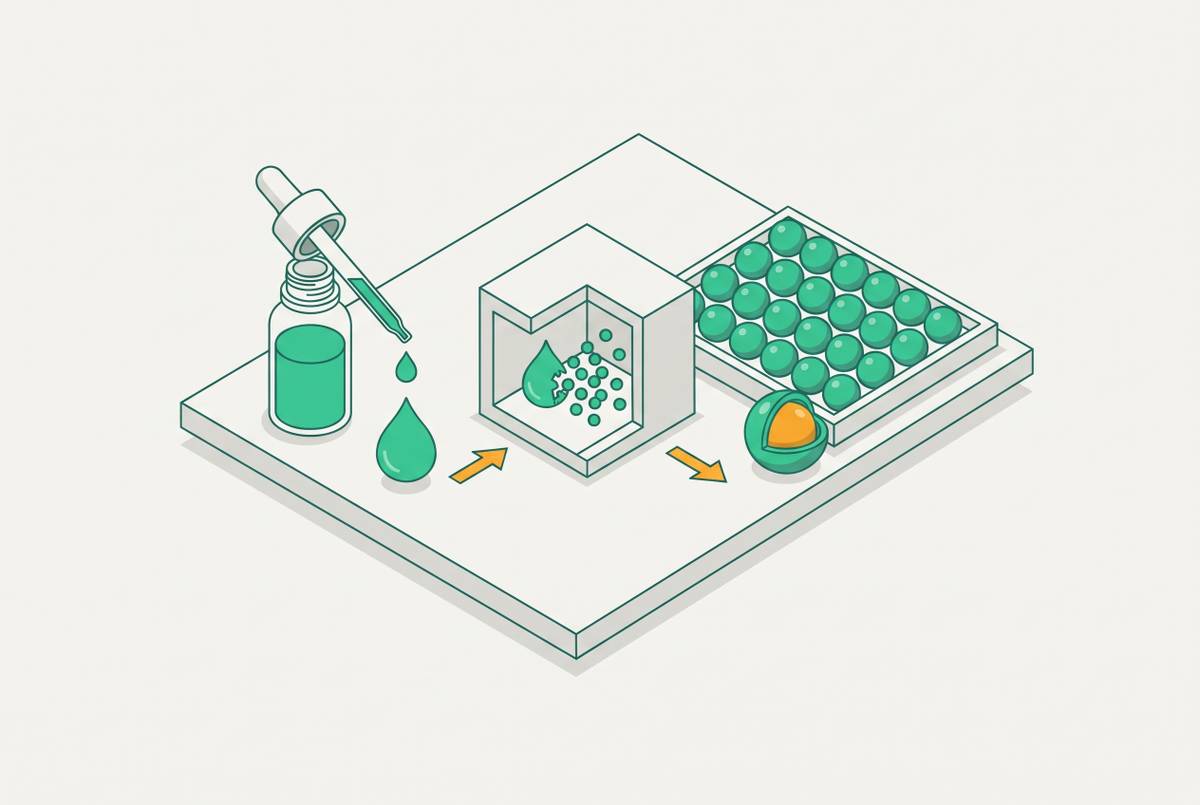
Buccal absorption takes place through the lining of the cheek, and sublingual absorption takes place under the tongue. A suitable compound dissolves in the saliva film and crosses the thin tissue into nearby capillaries. Think of this as entering a highway on-ramp. Digestive absorption takes the city route through the gastrointestinal tract and liver first. The shorter route can make more of a compound available to work when first-pass metabolism would greatly reduce the amount.
Speed is the other potential advantage. The often-cited comparison of 10–20 minutes for buccal or sublingual delivery against 45–90 minutes for capsules is too broad to predict every nootropic’s onset. Timing depends on the compound and preparation. Getting into circulation faster also does not prove that a shot will have a cognitive effect that can be felt within that time.
The formula has to make this route work. Moisture affects dissolution, molecular weight affects how a compound passes through tissue, and the pH of the preparation affects absorption. Contact time is another constraint because a quickly swallowed drink has less opportunity for absorption through the mouth. Fat-soluble or digestion-dependent ingredients do not gain a mucosal advantage merely by becoming liquid.
Which ingredients deliver meaningful cognitive benefit through liquid formats, ranked by evidence strength
The strongest starting points are citicoline and caffeine paired with L-theanine. Citicoline, including Cognizin®, has been evaluated in over 20 human clinical trials examining attention, memory, processing speed, and brain energy metabolism. It supplies raw materials for phosphatidylcholine synthesis and serves as a precursor for acetylcholine. A 28-day randomized trial published in Food and Nutrition Sciences reported improved attention and focus. That supports ingredient selection, but it does not establish equivalent results from every liquid preparation.
Caffeine plus L-theanine has particularly strong acute-effect evidence. At least 11 randomized controlled trials have examined their combined effects on attention, with the combination outperforming either compound alone. A double-blind crossover study in British Journal of Nutrition found that selective attention improved in sleep-deprived adults. Ceremonial-grade matcha supplies both compounds, together with catechins. Evidence for the combination still needs to be matched to the amounts a product actually delivers.
The next tier serves different performance needs. Ashwagandha, including KSM-66 and similar standardized extracts, has moderate-to-strong evidence for reducing cortisol with sustained use. Rhodiola Rosea has randomized-trial evidence for fatigue reduction and cognitive performance under stress, making it more relevant to immediate demanding sessions. These are not interchangeable ingredients. Bacopa may also help reduce stress-fatigue, although studies are less consistent on whether it directly improves cognition in healthy adults.
Lion’s Mane sits below those options for healthy high performers. Preclinical work links its compounds to nerve growth factor synthesis, but that mechanism is not proof of a human performance benefit. A 2025 randomized crossover study in young healthy adults found no significant effect on composite cognition or mood measures after one-time supplementation. Human studies that find benefits usually involve 8–16 weeks of use, but results from small trials are mixed, and benefits occur more consistently in studies of older adults with mild cognitive impairment. Even the better-supported ingredients, however, earn their place only when the product supplies a meaningful dose.
The underdosing problem: why a good ingredient list means nothing if the dose is wrong
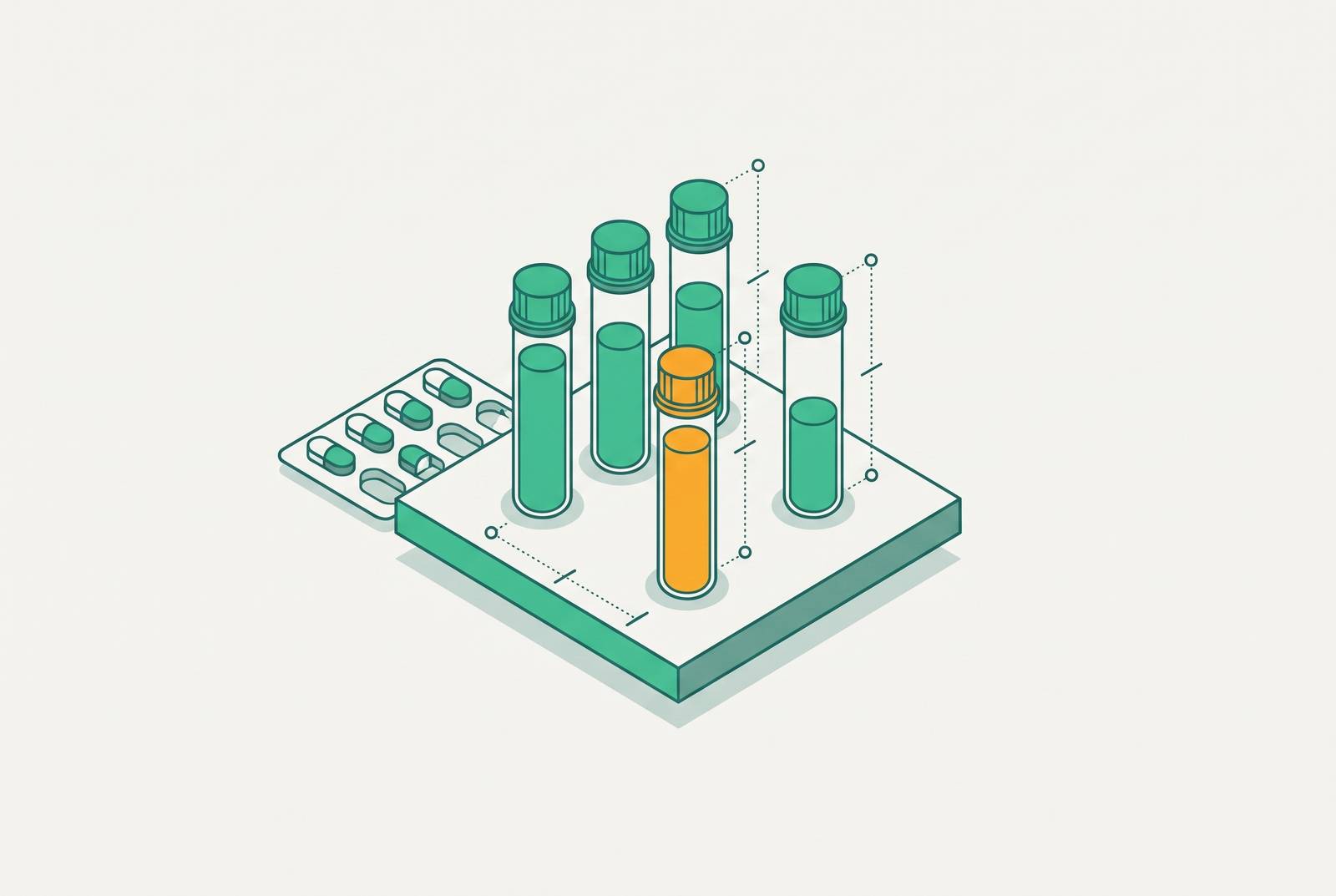
Small formats impose a real physical limit. A 2oz shot has limited room for six adaptogens, two mushroom extracts, and a vitamin complex at meaningful amounts. A long label can therefore conceal a thin formula. Even good ingredients can be included at doses too small to support the promised effect.
Citicoline makes that problem concrete without complicated arithmetic. Oral clinical trials use 250–500 mg daily, while sublingual delivery may have similar effects at lower doses if studies show that more of the compound is available to work. That possibility does not make 5 mg equivalent to a studied oral dose. With Ashwagandha, too, the extract and how much withanolide it contains matter along with the plant name.
Transparency is the first practical filter for buyers. A proprietary blend such as “NeuroFuel Complex” or “Brain Power Matrix” can leave individual amounts undisclosed, preventing a meaningful comparison with research. Named ingredients such as Cognizin®, KSM-66, and Bacumen® provide published dose information to cross-reference, but the product still needs to disclose its own amounts. The better construction is fewer ingredients at relevant doses.
What makes a liquid nootropic shot worth buying instead of capsules?
A worthwhile shot needs more than a caffeine kick. It should combine transparent ingredient doses, delivery suited to those ingredients, realistic timelines, independent safety testing, and restraint with caffeine. These criteria work together: a branded ingredient cannot compensate for an undisclosed dose, and a clever delivery system cannot establish benefits that the ingredient’s human evidence does not support.
Delivery engineering is one way to address small-volume constraints. Nanoencapsulation wraps actives in a lipid shell to protect them during delivery and improve membrane permeability. Its presence alone does not prove superior cognitive performance. The relevant distinction remains whether a formula was designed for its route or merely converted from capsule contents into a drink.
GMP certification addresses manufacturing standards, while third-party batch testing can examine heavy metals, mycotoxins, PFAS, and label accuracy. Certified Safe from Plastic Chemicals™ testing checks more than a standard heavy-metal panel does. None of these establishes efficacy, but they address a separate requirement that ingredient research cannot satisfy. High-dose caffeine should not be the only convincing part of the performance claim.
Nectr Focus Pouches disclose 62.5 mg Cognizin® Citicoline and 30 mg caffeine per pouch, use a sublingual format, and have GMP-certified manufacturing in the USA. A pouch is not a ready-to-drink shot. Brite Drinks offers a canned drink containing green tea extract, guarana, and green coffee bean, but no Cognizin®, and its swallowed format relies on digestive absorption. These details support only a format comparison.
The cortisol-cognition connection and why stress management belongs inside the formula, not alongside it
Stress at work can harm the very abilities a focus product promises to help. Sustained cortisol elevation impairs working memory, decision quality, and attention. A formula built only around stimulation leaves that part of performance unaddressed.
Ashwagandha acts on the HPA axis, the stress-response system involved in cortisol regulation. Meta-analyses of randomized controlled trials report significant cortisol reductions with repeated use. This is baseline work over weeks. Rhodiola serves a complementary role through faster stress resistance and mental energy under load, so the two ingredients should not be presented as equivalent ways to produce the same result.
Lopresti & Smith’s 2025 randomized controlled trial, published in Clinical Drug Investigation, found reduced self-reported stress reactivity and fatigue after cognitively demanding tasks with daily supplementation.
These different timelines explain the value of a daily ritual. A deliberate morning shot can provide a consistent dosing mechanism for ingredients whose effects require repeated use. The ritual gives an adequately dosed formula the opportunity to do the slower work that a one-off serving cannot fairly demonstrate.
Why sleep quality is a performance input the formula stack should support, not assume
No cognitive formula compensates for insufficient sleep. Sleep restriction increases attentional lapses, while sleep deprivation reduces working memory accuracy and impairs emotional regulation. More stimulation does not resolve that deficit. A performance stack therefore has to account for nighttime recovery.
Ashwagandha has the strongest sleep-support evidence among the adaptogens discussed here. A controlled trial using 300 mg/day over 90 days reported that sleep quality and psychological well-being improved and stress fell. That gives it a role spanning daytime cortisol load and nighttime recovery. The finding applies specifically to the studied Ashwagandha regimen.
Matcha provides a more tentative supporting signal. A one-year intervention study found that social cognitive function improved, with a tendency for subjective sleep quality to improve too. A tendency is not a firm result. Together, these findings support treating sleep as part of the daily performance plan while keeping expectations tied to the evidence and duration of use.
How to build a liquid shot ritual that compounds over time rather than chasing daily acute effects
Treating every nootropic like caffeine invites an early verdict on ingredients that require weeks. Acute attention support and sustained stress resilience are different outcomes. A good ritual makes room for both without promising a striking effect from every serving.
Readers choosing a formula should start with one that states the amounts of acute-effect ingredients such as matcha-derived caffeine plus L-theanine and Cognizin®. Those can give the routine a purpose early on while ingredients that take longer to work are taken regularly. Stress-buffering compounds such as Ashwagandha, Rhodiola, and Bacopa should also appear at disclosed, clinically relevant doses. Ingredient names alone do not clear that bar. If the stack includes a sleep variant, using it belongs within the same performance plan.
Caffeine plus L-theanine belongs in the immediate-attention category, while Ashwagandha is a multi-week proposition. Lion’s Mane research usually takes longer, often 8–16 weeks, and it is still unclear how much it helps healthy adults. An ingredient that needs repeated use should still be given time even if no effect is felt on the first day.
The recommended commitment is 60–90 days before evaluation, with one or two concrete performance proxies. Decision quality in high-stakes meetings and fatigue after demanding sessions are examples. A ready-to-drink shot needs no water, counting, or mixing, which can make that consistency easier.